NJ MASTER PLUMBING LIC No 12026

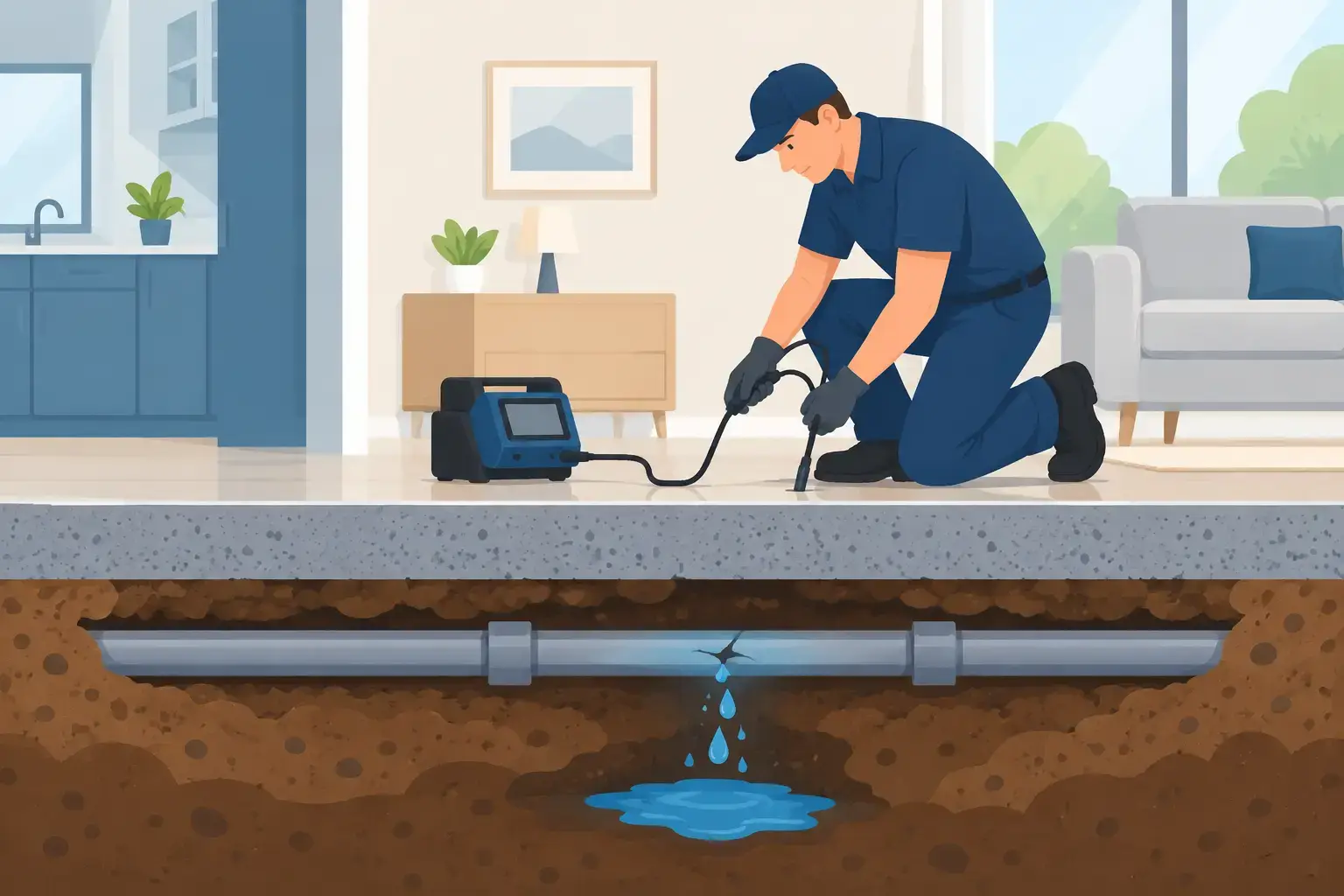
A warm spot under a kitchen floor, the sound of water when every faucet is off, or a water bill that suddenly jumps can point to a leak beneath your home’s concrete foundation. This guide to slab leak repair explains what those signs can mean, what to do first, and how a licensed plumber determines the right repair without adding unnecessary disruption to your property.
A slab leak is not usually a do-it-yourself repair. The damaged water line may be buried under concrete, and the visible symptom is often far from the actual break. Fast action matters because water can damage flooring, encourage mold growth, waste hundreds of gallons, and, in serious cases, affect the foundation itself.
What Is a Slab Leak?
A slab leak occurs when a water supply pipe running beneath a concrete slab develops a leak. In many homes, hot and cold water lines were installed below or within the foundation when the house was built. Over time, pipe materials, shifting soil, corrosion, poor installation, or repeated expansion and contraction can create a weak point.
Not every leak under a floor is the same. A pressurized water-line leak typically runs continuously, even when you are not using water. A drain-line leak may only show up when a fixture is draining. That distinction affects both the diagnosis and the repair method, which is why guessing based on one symptom can lead to the wrong solution.
Older New Jersey homes can be especially prone to plumbing issues tied to aging materials and previous renovations. However, slab leaks can happen in newer homes too. A small defect in a fitting or a pipe exposed to movement can take years to become noticeable.
Signs That Call for a Slab Leak Inspection
Some slab leaks make themselves obvious. Others start quietly and cause damage before anyone realizes there is a problem. If you notice one sign, it may be something minor. If several appear together, it is time to schedule a professional plumbing inspection.
A common warning sign is unexplained running-water noise. If you hear a faint hiss or flow under the floor after turning off fixtures, appliances, and irrigation systems, a pressurized line may be leaking. Another clue is a water meter that continues moving when no water is being used inside or outside.
Warm or unusually damp areas of flooring can also indicate a hot-water line leak. Tile may feel warm in one location, while carpet, wood, laminate, or vinyl can begin to discolor, buckle, or separate. A musty smell, peeling flooring, or moisture at the base of walls may mean water has already migrated beyond the original leak location.
Keep an eye on your water bill as well. A steady increase without a change in household use deserves attention. Low water pressure, reduced hot-water performance, or a water heater that seems to run more often than normal can also be connected to a concealed leak.
These symptoms do not automatically confirm a slab leak. A leaking fixture, irrigation line, appliance connection, or pipe inside a wall can produce similar signs. A proper diagnosis prevents you from opening a floor or starting repairs before the source is known.
What to Do Before the Plumber Arrives
If water is actively surfacing through the floor or causing visible damage, shut off the home’s main water supply if you can do so safely. This can limit water loss until help arrives. If the leak appears connected to a hot-water line and you turn off the water supply to the water heater, follow the manufacturer’s guidance before turning the unit back on. A water heater should not operate without water in the tank.
Move rugs, furniture, boxes, and electronics away from wet areas. Take clear photos of the damage for your records, especially if flooring, cabinetry, or walls are affected. Avoid drilling into the floor, breaking concrete, or using chemical products in an attempt to locate the leak. Those steps can increase damage and make a professional repair more difficult.
If the leak is significant, emergency service is the right call. For a suspected slow leak without active flooding, arrange service promptly rather than waiting for the next renovation or flooring project. Water under a slab does not improve with time.
Guide to Slab Leak Repair Options
Once a plumber confirms the leak location and the condition of the piping, the repair should be based on the pipe layout, the age of the system, accessibility, and the likelihood of future failures. The least invasive option is not always the best long-term option, and the most extensive repair is not always necessary.
Direct access repair
With a direct access repair, the plumber opens a targeted section of flooring and concrete to reach the damaged pipe. The compromised section is removed and replaced, then the opening is restored after plumbing work is complete.
This approach can make sense when the leak is isolated, the pipe is otherwise in good condition, and the affected area is easy to access. It can be a cost-effective repair for a single failure. The trade-off is the disruption to flooring and concrete, along with the possibility that aging pipes may develop another leak elsewhere later.
Rerouting the water line
A reroute, sometimes called repiping around the slab, takes the affected water line out of service and installs a new route through walls, ceilings, attics, or other accessible areas. This avoids opening the slab in many cases.
Rerouting is often worth considering when the original piping has a history of leaks, when multiple weak areas are found, or when the leak sits beneath expensive finishes. It may involve opening drywall and making access repairs afterward, but it can reduce the risk of repeatedly cutting into the foundation. The best route depends on the home’s design and the condition of the remaining lines.
Full or partial repiping
If a plumbing system has recurring leaks, widespread corrosion, or obsolete pipe material, replacing more than one line may be the practical choice. A partial repipe addresses a problem section, while a full repipe replaces a larger portion of the home’s water distribution system.
This is a larger project, but it can provide a more durable answer than making several isolated repairs over time. A licensed plumber should clearly explain why this option is recommended, what areas will be accessed, and what restoration work may be needed. Transparent pricing matters here because the right decision should be based on the property’s needs, not pressure to choose the biggest job.
How Professionals Find a Leak Without Guesswork
A good slab leak repair begins with accurate leak detection. Plumbers may use a water meter test, pressure testing, acoustic listening equipment, thermal imaging, or other diagnostic tools to narrow down the source. The goal is to identify whether the problem is on a water line, drain line, or another part of the plumbing system before a repair plan is made.
Detection is especially valuable when there is no visible water. A leak can travel under flooring or along the edge of a slab, so the wet spot is not always directly above the damaged pipe. Careful testing helps limit unnecessary demolition and gives you a clearer explanation of the recommended repair.
Ask the plumber what was found, which line is affected, and why a particular repair approach makes sense. You should also ask whether the surrounding piping shows signs of wear that could influence the long-term plan. Clear answers help property owners balance immediate cost with future reliability.
Repair Costs and Insurance Considerations
Slab leak repair costs vary widely because the work can range from a small accessible pipe repair to rerouting multiple lines and restoring finished surfaces. The location of the leak, pipe material, access needs, flooring type, and extent of water damage all affect the final price.
Water damage restoration and flooring replacement may be separate from the plumbing repair itself. Before work begins, request a clear scope that distinguishes leak detection, plumbing repair, access work, and any restoration that may be required afterward. For larger repairs, financing options can help homeowners address an urgent issue without delaying needed work.
Homeowners insurance policies differ. Some may cover sudden water damage but not the cost of repairing the failed pipe, while others have specific exclusions or deductibles for foundation-related work. Document the issue, save invoices and photos, and contact your insurer early if there is substantial damage. Do not wait for an insurance decision before stopping an active leak.
Preventing the Next Plumbing Leak
No homeowner can prevent every hidden pipe failure, but paying attention to early warning signs can reduce the damage. Monitor water bills, address drops in water pressure, and repair smaller leaks before they become larger problems. If your home has older piping or a history of leaks, ask a licensed plumber about the condition of the system during your next service visit.
For homeowners, landlords, and small-business property owners, a slab leak is stressful because the problem is out of sight and often urgent. The right response is not to panic or start breaking up floors. Shut off water when necessary, protect the affected area, and get a clear diagnosis from a qualified plumbing professional. DrainPro Plumbing Services can help New Jersey property owners identify the source, explain the repair options plainly, and move quickly toward a lasting fix.