NJ MASTER PLUMBING LIC No 12026

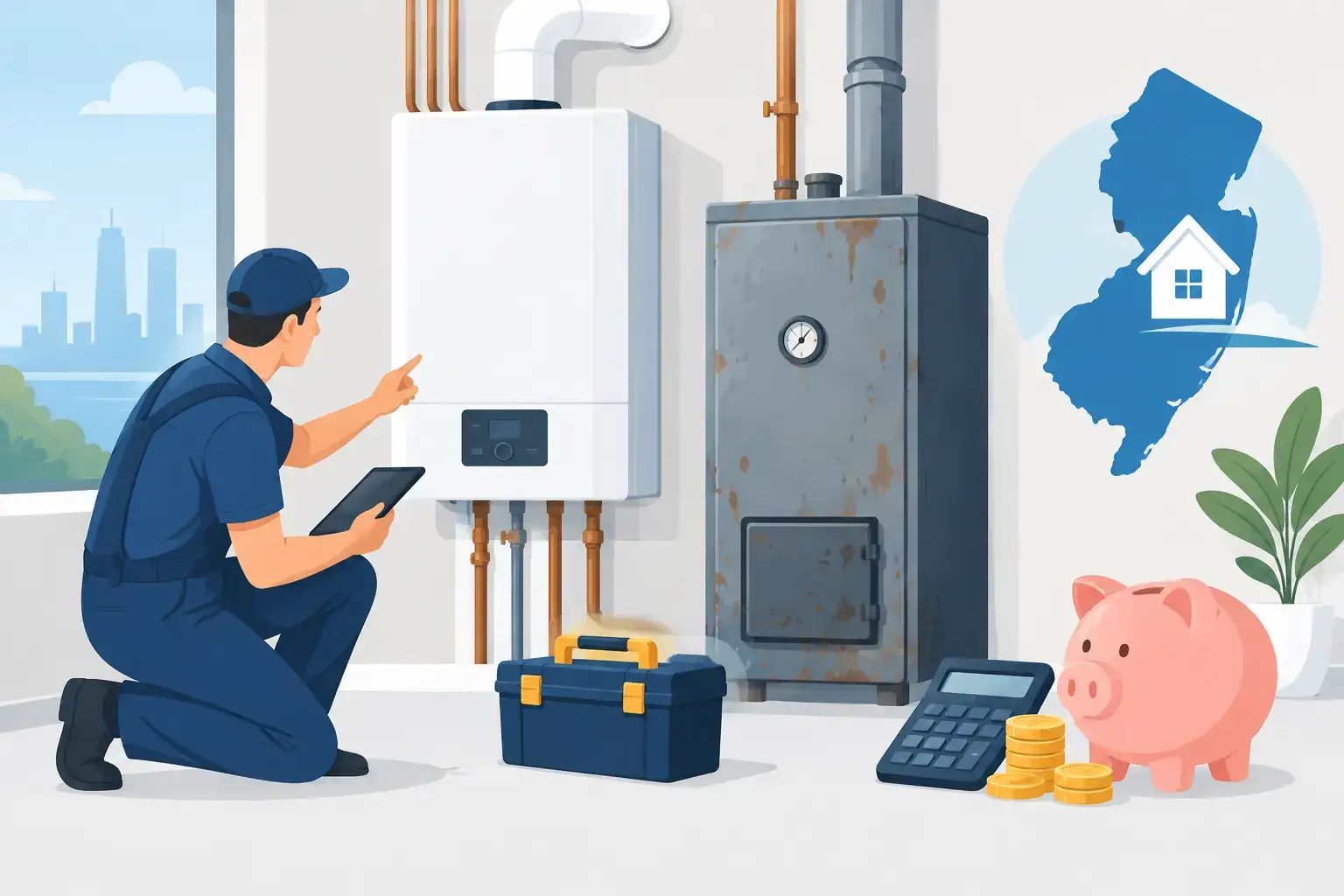
A boiler rarely fails at a convenient time. It may start with uneven heat, rising fuel bills, strange banging sounds, or a repair that no longer makes financial sense. Boiler replacement cost is often the first concern for New Jersey homeowners, but the right number depends on far more than the price of the unit itself.
A clear estimate should explain the equipment being installed, the work required to connect it safely, and any changes needed to keep the heating system reliable. That clarity matters when you are making a major decision for your home, rental property, or small business.
What Does Boiler Replacement Cost Include?
For many New Jersey homes, a boiler replacement can range from roughly $6,000 to $15,000 or more. A straightforward replacement of a standard boiler may fall toward the lower end of that range. A high-efficiency model, a larger home, difficult access, or upgrades to venting and controls can move the total higher.
Those figures are planning ranges, not a one-size-fits-all quote. The most useful estimate is based on an on-site evaluation of the existing boiler, the fuel source, the heat distribution system, and the condition of the surrounding piping.
A complete replacement price commonly includes removal and disposal of the old boiler, the new unit, installation labor, piping connections, safety controls, venting, startup, and testing. Depending on the job, it may also include a circulator pump, expansion tank, air separator, zone valves, thermostat upgrades, chimney liner, condensate drain, electrical work, permits, or code-required changes.
If a price seems unusually low, ask what is excluded. A quote that only covers setting a boiler in place can leave out the work needed for safe, dependable operation.
The Main Factors That Affect Boiler Replacement Cost
Boiler type and efficiency
Conventional cast-iron boilers are often a familiar choice for homes with older hydronic heating systems. High-efficiency condensing boilers can use less fuel, particularly when the system is designed to operate at lower water temperatures. They also require proper condensate drainage and specialized venting, which affects installation cost.
Higher efficiency can reduce operating costs over time, but it is not automatically the best choice for every property. The right fit depends on your system design, fuel costs, maintenance expectations, and long-term plans for the home.
Correct boiler sizing
Bigger is not always better. An oversized boiler can cycle on and off too frequently, causing unnecessary wear and inefficient operation. An undersized unit may struggle to keep the building comfortable during a cold New Jersey winter.
A qualified plumber should consider the size and layout of the property, insulation, windows, heating zones, radiator or baseboard capacity, and the home’s heat loss. Replacing an old boiler with the same size without evaluating the system can lead to poor performance.
Fuel source and venting requirements
Natural gas boilers are common throughout New Jersey, but some properties use oil, propane, or other fuel sources. The existing fuel setup can influence both equipment selection and labor.
Venting is another major variable. A direct replacement that can use existing approved venting is generally simpler than a project requiring a new chimney liner, sidewall vent, roof penetration, or changes to combustion air requirements. High-efficiency units use different venting materials than many older boilers, so this part of the installation should be reviewed carefully.
Condition of the heating system
The boiler is only one part of the system. Older homes may have corroded shutoff valves, aging circulators, leaking zone valves, undersized expansion tanks, or piping that needs attention before a new boiler can operate properly.
In some cases, replacing a worn component during installation is the sensible choice. It can raise the upfront cost, but it may prevent a service call shortly after the new boiler is installed. The key is knowing why each recommended item is needed, rather than accepting a vague list of add-ons.
Access, permits, and local code work
A boiler located in a finished basement, tight utility closet, crawl space, or upper-floor mechanical room may take longer to remove and replace. Access affects labor, especially when the old unit is heavy or when new piping and venting must be routed through finished areas.
New Jersey municipalities may also require permits and inspections for boiler replacement. Licensed installation helps ensure the work meets applicable code requirements and protects the safety of the property. Permit costs vary by location, so they should be addressed before the job begins.
When Repair Makes Sense and When Replacement Is Smarter
A repair can be the right decision when the boiler is relatively new, the problem is isolated, and replacement parts are readily available. A failed ignition component, pressure issue, circulator problem, or control repair does not always mean the entire boiler needs to go.
Replacement becomes more reasonable when repairs are frequent, parts are obsolete, corrosion is extensive, efficiency has declined, or the unit is nearing the end of its expected service life. Many boilers can last 15 to 25 years with proper maintenance, though actual lifespan depends on equipment quality, water conditions, installation quality, and service history.
It is also worth looking beyond the immediate repair bill. If a repair is expensive and the boiler has already needed multiple repairs, putting that money toward a properly sized replacement may offer better value. On the other hand, replacing a boiler solely because it is old, while it is operating safely and reliably, may not be necessary.
How to Compare Boiler Replacement Estimates
Comparing proposals is easier when each contractor explains the same essentials. You should know the proposed boiler make and model, its efficiency rating, capacity, warranty information, scope of labor, permit responsibility, and whether old equipment will be removed.
Ask whether the estimate includes needed accessories such as pumps, controls, expansion tank, venting, condensate piping, and system cleanup. If the job involves multiple heating zones, confirm how each zone will be tested after installation.
It is also reasonable to ask how the contractor determined the boiler size and what happens if unforeseen issues are found after the old boiler is removed. Clear answers now help prevent surprises later. Transparent pricing does not mean every job has the same price. It means you understand what you are paying for and why.
Ways to Plan for the Cost Without Cutting Corners
A boiler replacement is not the place to choose equipment based on the lowest upfront number alone. Poor sizing, incomplete venting work, or skipped safety components can create higher costs later. Instead, focus on the full installed value: safe operation, suitable efficiency, quality workmanship, and a system that can be serviced in the future.
If replacement is planned rather than an emergency, schedule an evaluation before heating season. You will have more time to compare options, discuss efficiency goals, and address related repairs without the pressure of a no-heat situation. Property owners and landlords can also use this time to review the condition of radiators, baseboards, thermostats, and zone controls.
Financing may help make a necessary replacement more manageable, especially when a failed boiler cannot wait. Before choosing that route, understand the terms and make sure the installation scope is complete. A licensed professional can help you weigh repair versus replacement and select equipment that matches your property rather than pushing a generic solution.
When your boiler is showing its age, getting a detailed assessment early can turn a stressful heating failure into a well-planned home investment. DrainPro Plumbing Services can evaluate the system, explain the work in plain language, and help you move forward with a solution built for reliable heat.