NJ MASTER PLUMBING LIC No 12026

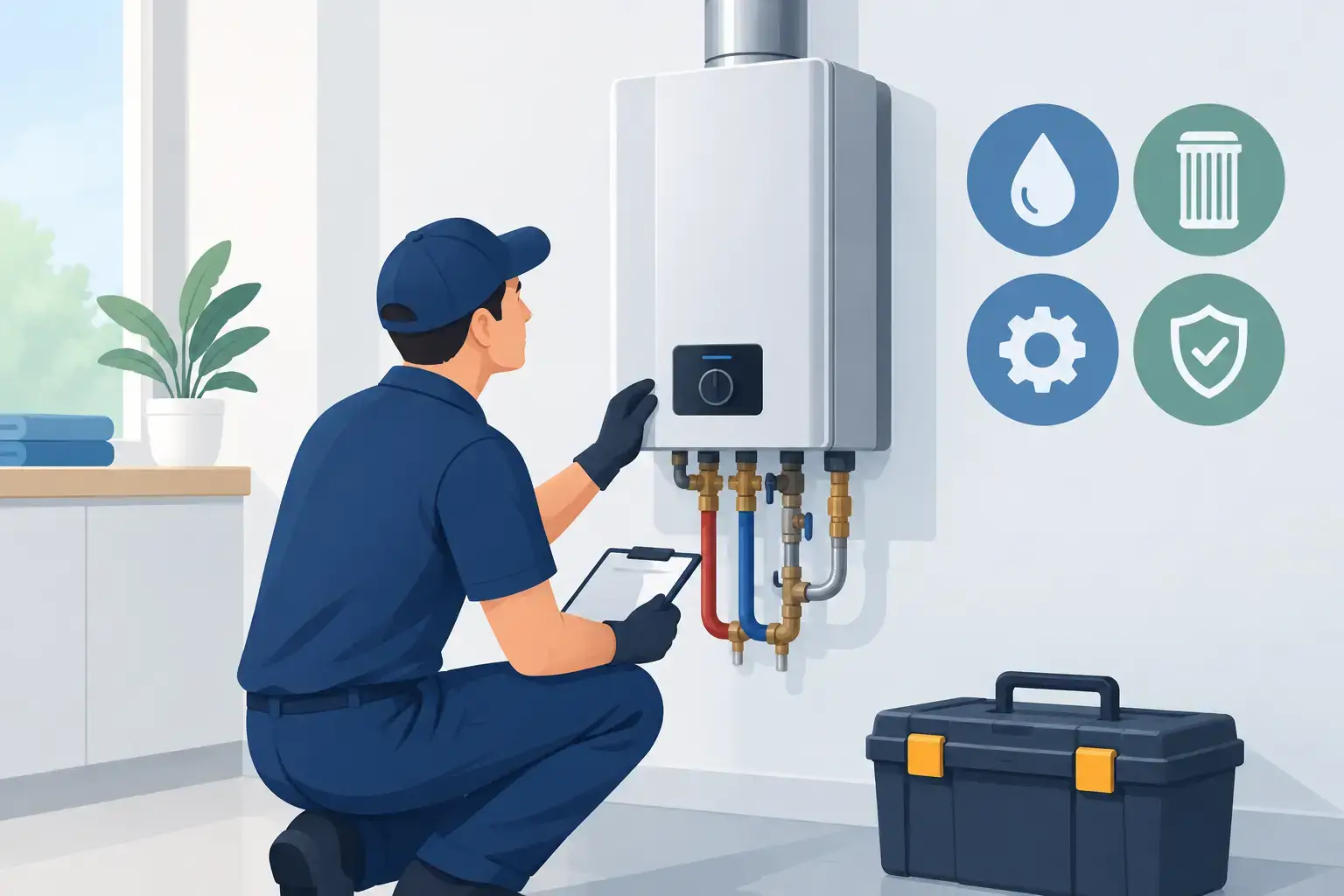
A tankless water heater can provide dependable hot water for years, but it does not run maintenance-free. Mineral buildup, dirty inlet screens, blocked venting, and small leaks can gradually reduce performance. Knowing how to maintain tankless water heater equipment helps protect your hot water supply, avoid unnecessary repairs, and get the efficiency you expected when the unit was installed.
For most New Jersey homes, an annual service visit is a smart baseline. Homes with hard water, well water, high hot-water demand, or a water softener issue may need more frequent attention. The right schedule depends on the unit, the water quality, and how heavily your household uses it.
Why Tankless Water Heater Maintenance Matters
Unlike a conventional water heater, a tankless unit heats water as it moves through a heat exchanger. That design saves space and can reduce standby energy loss, but it also means the system has narrow water passages that can collect mineral scale over time.
Calcium and magnesium in the water can coat the inside of the heat exchanger. As that layer grows, the heater has to work harder to transfer heat. You may notice lower water flow, inconsistent water temperature, longer wait times for hot water, or an error code on the display. Left alone, scaling can contribute to overheating and expensive component damage.
Maintenance also gives a plumber a chance to spot issues before they become an emergency. A worn valve, small connection leak, corrosion, venting concern, or gas-related issue is much easier to address during planned service than after your household loses hot water.
How to Maintain a Tankless Water Heater at Home
Homeowners can handle a few simple checks between professional service appointments. Always begin with your owner’s manual. Maintenance instructions vary by manufacturer and model, especially for gas, electric, indoor, outdoor, condensing, and non-condensing units.
Check the exterior and surrounding area
Look at the unit once every month or two. The area around it should be dry, clear, and easy to access. Do not store paint, cleaning chemicals, boxes, or other items against the heater. Gas-fired units need proper combustion air and venting, while all units need space for safe service.
Check the floor and nearby piping for moisture. A drip may come from a plumbing connection, pressure-relief component, condensate line, or the unit itself. Even a minor leak deserves attention, particularly if it is near electrical connections or finished walls.
If you have an outdoor tankless unit, keep leaves, snow, ice, mulch, and nests away from the intake and exhaust openings. Never cover the unit in a way that blocks airflow.
Clean the cold-water inlet filter
Most tankless water heaters have an inlet screen or filter that catches sediment before it reaches the heat exchanger. A clogged filter can restrict water flow and trigger trouble codes.
The process generally involves shutting off the water supply, relieving pressure as directed by the manufacturer, removing the filter, rinsing it clean, and reinstalling it correctly. Because small parts and seals can be easy to damage or lose, do not force anything. If the screen is torn, heavily corroded, or repeatedly fills with debris, call a plumber to find out why.
Watch for changes in hot-water performance
Your water heater often gives notice before it fails. Pay attention if the shower turns hot and cold, hot water takes noticeably longer to arrive, water pressure drops only on the hot side, or the unit starts making unfamiliar noises. Error codes should not be ignored, even if the unit resets and begins working again.
For gas tankless systems, unusual smells, soot, repeated ignition failures, or a yellow instead of blue burner flame require prompt professional service. If you smell gas, leave the area, avoid switches and open flames, and contact your gas utility or emergency services as appropriate before calling a licensed plumber.
Flush Mineral Scale From the Heat Exchanger
Flushing is the most important maintenance task for many tankless systems. It circulates a manufacturer-approved descaling solution through the heat exchanger to dissolve mineral deposits. In areas with harder water, this is commonly needed every year. Some homes need it every six months, while homes with very soft water may follow a different schedule recommended by the manufacturer.
A proper flush usually requires service valves, hoses, a small circulation pump, a bucket, protective gear, and the correct descaling solution. The general process includes:
- Turning off the unit’s power source and isolating the water supply according to the manufacturer instructions.
- Connecting the hoses to the service valves and circulating descaling solution through the heat exchanger for the recommended time.
- Flushing the system thoroughly with clean water so no solution remains inside.
- Restoring water, power, and fuel safely, then checking operation and connections for leaks.
The steps sound straightforward, but details matter. Opening the wrong valve, using an unsuitable chemical, failing to rinse fully, or restarting a gas unit incorrectly can create a bigger problem. Not every installation has easy-to-reach isolation valves, either. If your unit is in a tight utility closet, above a finished ceiling, or connected to complex plumbing, professional maintenance is the safer choice.
Avoid using household vinegar unless your manufacturer specifically allows it. Some manufacturers recommend a particular descaling product, and following that guidance helps protect internal components and your warranty.
Do Not Skip Venting, Condensate, and Safety Checks
Gas tankless heaters need more than a water-side flush. The intake and exhaust venting must remain secure, clear, and properly connected. Condensing models also produce acidic condensate that drains through a line, often with a neutralizer. A blocked condensate drain can cause shutdowns, leaks, or water damage around the appliance.
During a professional tune-up, the technician should inspect the venting system, burner operation, gas connections, combustion-related components, electrical wiring, water connections, pressure relief provisions, filters, and condensate drainage where applicable. They can also confirm the heater is producing the correct temperature and flow for its settings.
Electric tankless heaters have different needs. They do not have gas venting, but they draw significant electrical power. A professional should inspect wiring, breakers, heating elements, and water connections if performance changes. Do not remove electrical covers unless you are qualified to work safely around energized equipment.
Set a Maintenance Schedule That Fits Your Home
An annual professional inspection and flush works well for many households. Move to twice-yearly service if you have hard water, a private well, a large family, several bathrooms in frequent use, or a history of scale-related error codes. If a water softener is installed, keep it maintained too. A softener that has run out of salt or is not regenerating correctly will not provide the protection you expect.
It helps to keep a simple record of service dates, error codes, repairs, and any changes in water quality. This information makes diagnosis faster if a problem develops and gives you a clearer picture of the unit’s condition as it ages.
When to Call a Licensed Plumber
Call for service if the heater stops producing hot water, repeatedly shuts down, leaks, displays recurring error codes, makes banging or whistling sounds, or delivers inconsistent temperatures. Those symptoms can be caused by scale, but they can also point to flow-sensor problems, ignition issues, venting concerns, failed components, or plumbing conditions elsewhere in the home.
A licensed plumber can flush the unit, inspect the full installation, and explain what needs attention before work begins. For New Jersey homeowners and property managers, DrainPro Plumbing Services can provide tankless water heater maintenance, repair, and replacement support with clear communication and dependable workmanship.
A few minutes of attention during the year and one well-timed professional service visit can make a real difference. Keep an eye on performance, address warning signs early, and schedule maintenance before the next hot-water interruption catches your household off guard.